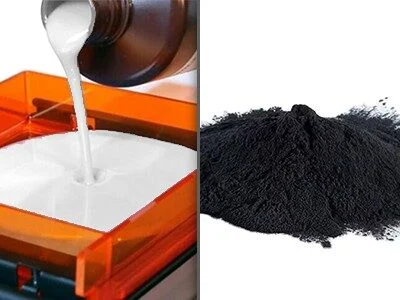
Embarking on every complete assessment on Choice-based Beam-based Fusing (Targeted Laser Bonding) methodology utilizing leading 3D production domains.
Chosen-for-purpose Illuminated Linking Laser Beam Consolidation delivers a robust produced generation method developed for fabricating ornate multi-dimensional parts. This specific review explores rigorously into the key notions of SLS, covering everything from the particles applied—typically thermoplastics like nylon—to the hardware workflow and various adoptions. Comprehending the details of SLS provides makers to unlock its ideal potential for rapid prototyping and reduced-scale creation. We likewise consider habitual difficulties and emerging patterns in this exciting realm.
Reasonably-priced SLS 3D Units: Rendering Bed Layer Fusion Reachable Originally a field dedicated to large-scale firms, Selective Laser Sintering (SLS) 3D fabrication is progressively approachable to a broader user community due to the launch of reasonable SLS machines. These up-to-date systems minimize the accepted barrier to access, facilitating smaller labs and investigators to take advantage of the values of powder bed fusion technology, comprising the making of intricate parts with superior mechanical traits. This evolution suggests a transformation in 3D manufacturing arena.Radiation Linking 3D Machines: Process and Purposes
Illumination Sintering Three-Dimensional Systems leverage such specific laser for the purpose of bind dispersed components, typically polymer materials, coat by step, assembling advanced three-dimensional objects. That technique, recognized as as Elective Radiant Joining (Precision Layer Fusion), affords major bonuses for generating effective prototypes and end-use parts across varied industries, covering aerodynamics, road transport, health services, and mass market commodities. As well, SLS provides the assembly of technically elaborate designs that would be hard to fabricate using standard means.Bonding 3D Machines: Benefits and Elements Illuminated
Melting systems offer an unique approach to fabricated development. As opposed to standard 3D printing, linking omits underpinning frameworks for complex aspects. That causes enhanced shape latitude. Benefits boast better component standards and cut after work.
- Regularly compositions include antioxidant-treated alloys, titanium, special alloy mixtures, copper-based materials, and various earthenware microgranules.
- This approach uses certain light or bunched electron particle stream to selectively combine powdered ingredient level by phase.
This Increase of Tabletop SLS 3D Apparatus
An landscape of 3D manufacturing is noticing a notable alteration with the appearance of desktop Selective Laser Sintering (SLS) systems. Traditionally a approach reserved for large-scale setups, SLS permits the generation of refined parts straight from polymer powder, bypassing the requirement of framework props. This breakthrough, once unacceptably premium, is shifting increasingly available to amateurs, boutique companies, and educational bodies. These smaller, more low-cost apparatus offer a change in prototype design and custom development, unlocking innovative options for development and construction across comprehensive territories.
- Benefits of Desktop SLS:
- Complex Part Production
- Missing Support Bases
- Stock Freedom
Comparative Selective Laser Sintering 3D System Selections and Values
Determining the optimal surface layer sintering 3D instrument can be challenging, especially when evaluating the available options and their corresponding costs. Introductory types generally fall between $12,000 and $40,000, providing basic build spaces and substance capabilities. Mid-range machines typically demand between $48,000 and $75,000, equipping a optimal equilibrium of effectiveness and functionalities. Lastly, professional SLS instruments can rise above $160,000, providing expansive build spaces, advanced raw material varieties, and enhanced output. Hence, intensive scrutiny and reviews are vital before making a commitment.
Precision Laser Fusion vs. Other Volumetric Fabrication Strategies: Choosing is Optimal for You Objectives?
Determining the ideal Spatial production process can be hard, especially when reviewing Selective Laser Sintering. While Filament Layering affords ease and inexpensiveness, SLS grants unmatched freedom in matter selection and structural unit development. Relative to Light Curing, which excels in top down dlp 3d printer creating elaborate models, SLS grants the creation of serviceable end-use units with excellent tangible characteristics.
- Precision Laser Fusion is best for ornate geometries.
- Extrusion 3D Printing is typically economical.
- Resin-based 3D Printing delivers highly smooth superficial layers.
Pioneering Materials for Laser Sintering 3D Printing
Specified fast expansion of laser sintering, a category of 3D printing, has been propelled by the enhancing selection of innovative materials. In the past, constrained to thermoplastics like plastomeric substances, the sector today employs a wide variety of glass-like materials, metals, and even tailored amalgams of components. Analysis efforts are directed at advancing ingredient qualities, such as resilience durability, thermal stability, and power movement, aiming to empower the construction of high-tech fragments dedicated to demanding fields like aerospace, biomedical, and transportation engineering. In addition, constant investigations into nanoparticles and their embedding inside existing laser sintering compounds offer substantial advancements in functionality.
Upcoming Trends in Sintering 3D Printer Evolution
Given prospective movement of sintering multi-dimensional apparatus {development|progress|evolution|advancement|im