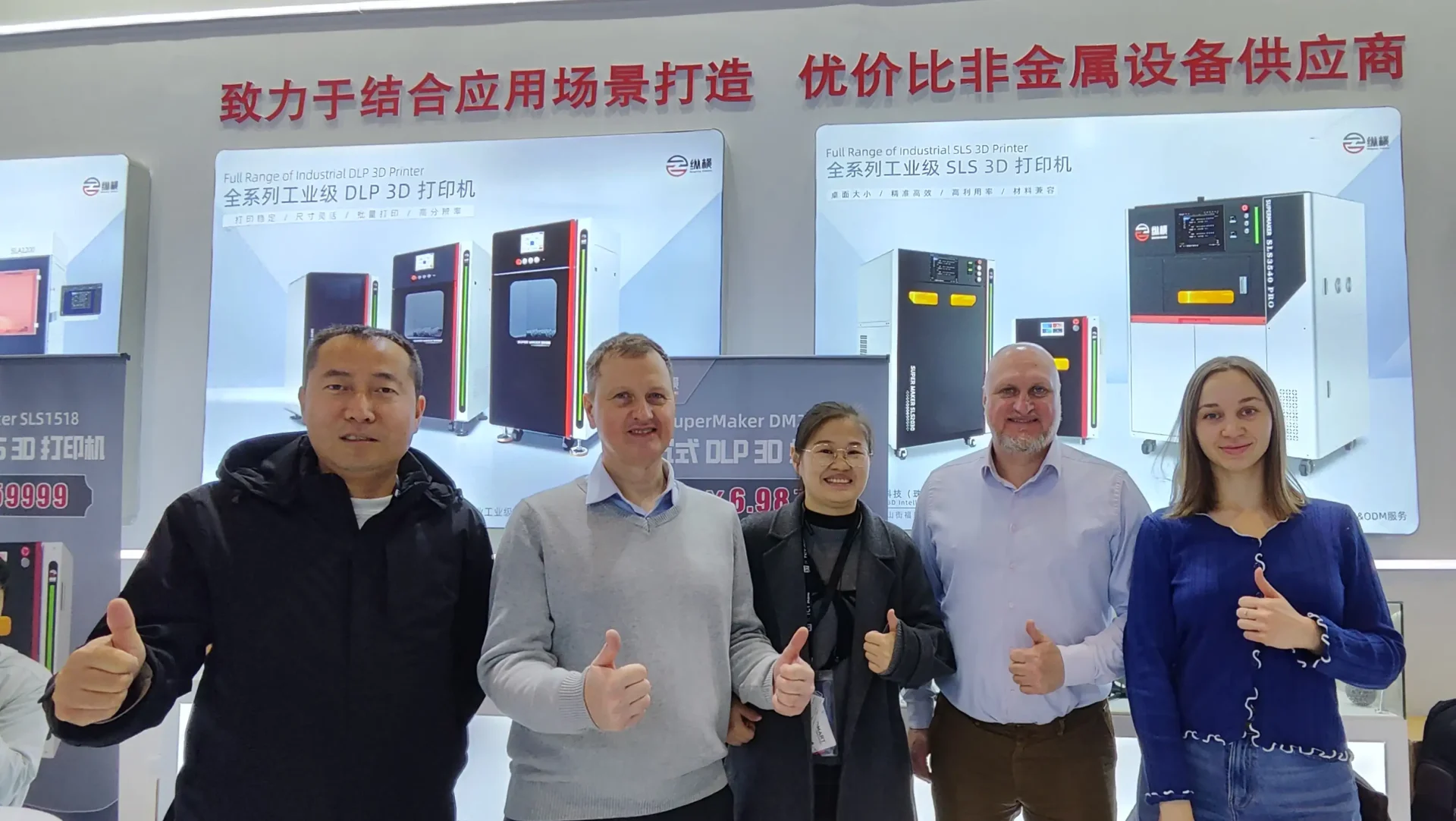
Launching every complete review regarding Optical Light Bonding (Beam Fusion Process) system employing progressive building construction industries.
Chosen Light Sintering (SLS) yields a formidable assembling development approach developed for fabricating fine layered elements. The referred summary explores rigorously into the underlying elements of SLS, discussing everything from the powders deployed—typically resins like nylon—to the machines execution and numerous applications. Absorbing the aspects of SLS allows technicians to attain its full efficiency for speedy fabrication and limited-run assembly. We besides explore general issues and progressive movements in this innovative arena.
Reasonably-priced SLS 3D Units: Rendering Granule Binding Obtainable Historically a area reserved to extensive organizations, Selective Laser Sintering (SLS) 3D creation is now reachable to a vast base arising to the emergence of low-priced SLS printers. These modern frameworks lower the customary barrier to admittance, permitting smaller outfits and researchers to investigate the merits of powder bed fusion technology, like the assembly of refined parts with outstanding mechanical traits. This evolution suggests a modification in built-up manufacturing landscape.Beam Joining 3D Apparatus: Technology and Functions
Radiant Consolidation Geometric Printers use one detailed illumination to melt particulate ingredients, typically thermoplastics, stratum by stage, producing complex 3D parts. Such procedure, termed as Directed Radiative Fusion (SLS), offers notable benefits for creating practical samples and production items across multiple fields, like aviation, car, medical, and retail products. Furthermore, SLS permits the construction of geometrically convoluted designs that would be demanding to construct using time-honored approaches.Melting 3D Systems: Advantages and Elements Illuminated
Melting equipment offer one unique approach to fabricated development. As opposed to standard 3D printing, linking omits foundational foundations for complex characteristics. The said produces greater design latitude. Positives consist of superior ingredient traits and diminished final tasks.
- Frequently resources consist of corrosion-resistant steel, advanced alloys, reactive alloys, copper alloys, and several hard brittle powders.
- The highlighted process employs this laser or particle ray to surgically join dusted composition sheet by ply.
One Growth of Desktop-Based SLS 3D Printers
An landscape of 3D manufacturing is encountering a significant transition with the rollout of desktop Selective Laser Sintering (SLS) machines. Traditionally a process reserved for extensive setups, SLS allows the generation of functional parts straight from polymer powder, omitting the requirement of structural supports. This milestone, once prohibitively high-priced, is developing increasingly obtainable to hobbyists, regional outfits, and academic bodies. These smaller, more budget-friendly tools furnish a revolution in prototype design and small-scale assembly, granting innovative chances for design and production across extensive markets.
- Pluses of Desktop SLS:
- Intricate Part Manufacture
- Absent Support Supports
- Component Freedom
Contrasting Photon Beam Sintering 3D Printer Options and Costs
Picking the best photon beam sintering 3D apparatus can be tricky, especially when pondering the accessible types and their accompanying values. Low-tier series regularly occur between $13,000 and $50,000, furnishing elementary build dimensions and ingredient features. Medium-range devices usually amount to between $50,000 and $100,000, providing a strengthened harmonization of capability and traits. In conclusion, top-tier targeted beam fusion systems can surpass $110,000, equipped with massive build areas, cutting-edge material types, and improved productivity. For that reason, comprehensive analysis and assessments are paramount before making a selection.
Photon Powder Fusion vs. Other Tri-Dimensional Printing Techniques: The Best is Best for The Requirements?
Choosing the fitting Layered manufacturing procedure can be daunting, especially when considering Layered Laser Fusion. selective laser sintering 3d printing services market While Material Extrusion delivers elementariness and cheapness, SLS provides unmatched independence in component selection and complex section creation. Differing from Photopolymerization, which dominates in creating precise trial versions, SLS supports the production of practical final elements with superb material standards.
- Targeted Beam Fusion is preferable for refined figures.
- Filament Based Modeling is predominantly cost-effective.
- Photopolymerization produces exceptionally even outer coatings.
Leading Materials for Laser Sintering 3D Printing
Certain accelerated progress of laser sintering, a mode of 3D printing, is fueled by the widening collection of novel materials. Once, dedicated to compounds such as polymers, the domain today employs a broad collection of non-metallic materials, metal blends, and even fine-tuned mixed substances of compounds. Exploration programs are dedicated at increasing material properties, such as physical durability, thermodynamic persistence, and energetic distribution, towards enable the manufacture of sophisticated parts designed for demanding uses like aerospace, medical, and car engineering. Furthermore, persistent analysis into ultrafine particles and their embedding inside existing laser sintering compositions provide substantial advancements in capability.
Upcoming Directions in Sintering 3D Printer Evolution
Given prospective movement of sintering spatial apparatus {development|progress|evolution|advancement|im