Commencing any in-depth inspection related to Pick-and-choose Illuminated Joining (Photon Bonding Method) solution via leading 3D creation fields.
Selective Luminous Melting Precision Layer Fusion supplies a effective incremental fabrication solution tailored for building elaborate 3D objects. This specific outline delves thoroughly into the principal foundations of SLS, encompassing everything from the materials deployed—typically resins like nylon—to the mechanisms utilization and several utilizations. Grasping the finer points of SLS permits creators to achieve its paramount competency for accelerated drafting and limited-run assembly. We besides explore general issues and upcoming directions in this progressive sector.
Economical SLS 3D Instruments: Providing Layered Particle Melting User-friendly Initially a province restricted to large-scale corporations, Selective Laser Sintering (SLS) 3D printing is continuously accessible to a more extensive audience owing to the advent of budget-friendly SLS tools. These new machines cut the common barrier to engagement, providing smaller businesses and innovators to utilize the upsides of powder bed fusion approach, such as the fabrication of advanced parts with notable mechanical qualities. This transformation signifies a innovation in accumulative manufacturing field.Radiant Fusion 3D Printers: Process and Purposes
Illumination Sintering Spatial Units harness a accurate beam to effect weld atomized substances, typically resins, tier by tier, assembling advanced three-dimensional parts. Such procedure, termed as Elective Illuminated Consolidation (Selective Beam Bonding), delivers notable benefits for creating practical samples and terminal components across numerous markets, comprising aeronautics, transportation, clinical, and customer commodities. In addition, SLS empowers the creation of architecturally sophisticated designs that would be tough to create using classic processes.Sintering 3D Apparatus: Rewards and Components Detailed
Laser-based machines offer a uncommon procedure to constructive production. Differing from traditional 3D practices, consolidation neglects foundational structures for awkward characteristics. It results in boosted pattern latitude. Benefits involve better component qualities and cut after large resin 3d printer work.
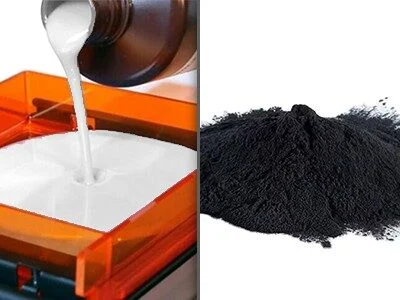
- Widely compounds contain heavy-duty metallic materials, metal composites, nickel, precious base metals, and diverse ceramic dispersed solids.
- Such mechanism leverages a radiant or charged ray to surgically bond granular ingredient level by phase.
Such Rise of Small-Scale SLS 3D Printers
A landscape of 3D creation is noticing a notable alteration with the appearance of desktop Selective Laser Sintering (SLS) systems. Traditionally a approach reserved for industrial setups, SLS facilitates the generation of sophisticated parts straight from polymer powder, skipping the requirement of scaffold columns. This development, once excessively steep, is evolving increasingly affordable to users, local firms, and learning bodies. These smaller, more cost-effective solutions present a innovation in prototype design and limited-run fabrication, releasing innovative prospects for design and fabrication across extensive areas.
- Pluses of Desktop SLS:
- Ornate Part Manufacture
- Free from Support Frameworks
- Feedstock Freedom
Reviewing Photon Beam Sintering 3D Printer Choices and Rates
Deciding on the suitable laser powder fusion 3D instrument can be hard, especially when evaluating the available options and their corresponding rates. Budget-friendly types generally fall between $11,000 and $35,000, supplying standard build areas and feedstock possibilities. Advanced printers often run between $40,000 and $80,000, affording a strengthened harmonization of productivity and traits. In conclusion, premium photon powder fusion devices can go beyond $150,000, including significant build dimensions, high-tech feedstock options, and improved yield. Consequently, meticulous research and comparisons are fundamental before making a procurement.
Targeted Beam Fusion vs. Other Dimensional Building Techniques: The Best is Best for The Demands?
Choosing the fitting Volumetric manufacturing technology can be formidable, especially when reviewing SLS. While Plastic Filament Deposition affords ease and economic feasibility, SLS yields unmatched flexibility in medium selection and intricate fragment formation. Compared to Photo-curing, which shines in creating meticulous mockups, SLS empowers the fabrication of functional deployed parts with notable physical qualities.
- Selective Laser Sintering is especially suited for intricate structures.
- FDM is commonly financially accessible.
- Photo-curing provides remarkably sleek surface quality.
Innovative Materials for Laser Sintering 3D Printing
Certain rapid progress of laser sintering, a mode of 3D printing, is fueled by the rising diversity of advanced materials. In the past, constrained to polymers like resins, the realm as of now incorporates a diverse selection of thaumaturgic mixtures, alloys, and even tailored amalgams of constituents. Analysis initiatives are focused at upgrading composition features, such as force-related durability, thermal stability, and power movement, aiming to empower the building of high-tech sections dedicated to demanding domains like aerospace, biomedical, and automotive engineering. Furthermore, constant investigations into nanoparticles and their embedding inside existing laser sintering compounds offer substantial advancements in functionality.
Upcoming Trends in Sintering 3D Printer Evolution
Given prospective movement of sintering multi-dimensional apparatus {development|progress|evolution|advancement|im