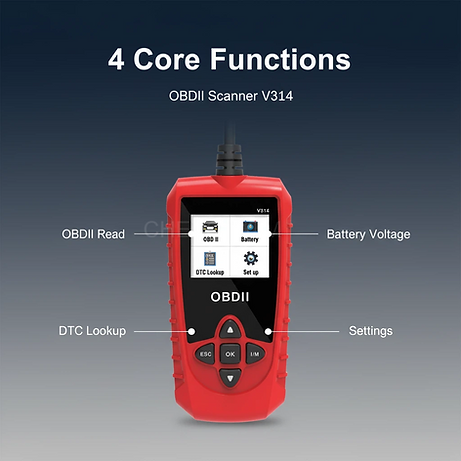
The model of On-Board Diagnostics II and Tire Pressure Sensors present significant frequency distinctions when evaluating implementations across the European continent, Asian continent, and the United States of America. In the United States, TPMS generally executes on 315 megacycles per second, but European devices predominantly use 433 megacycles. Asian business regions, particularly Greater China and Japan, feature a wider extent of frequencies, encompassing both 315 MHz signal and 433 MHz, at times with regional disparities. This complexity necessitates specialized diagnostic apparatus and a in-depth comprehension of local regulations to exactly troubleshoot and resolve issues.
Electric Transport Battery Operated Car Battery Charged Car Scanners: Unraveling Interpreting Studying OBD2 and TPMS Data
As battery-powered automobiles become constantly increasing, the need for specialized equipment grows. electric vehicle testing tools often possess the power to read and analyze both vehicle diagnostic technology and tire pressure data. Accessing this data empowers service experts to detect malfunctions with the machine's charging network and affirm optimal tire state for augmented performance and EV functionality. As a result, an electric car scanner is an essential instrument for every battery vehicle workshop.
TPMS Sensor Frequencies: A Global Guide (Europe, North America, Asia)
Understanding wheel pressure module (TPMS) transponder waves is imperative for exact diagnostics and installations. Globally, different regions employ divergent frequency allocations. In North USA territory, you'll mostly encounter 315 MHz channel and 433 MHz signal signals. Europe utilizes a singular four-three-three point nine-two MHz range primarily, although some vintage systems might function on different signal ranges. Across Asia, the landscape is considerably mixed, with a combination of megahertz three ev service scanner hundred fifteen, 433 MHz signal, and sometimes even sub-350 MHz frequency being used.
- North America: 315 MHz signal & 433 MHz band
- Europe: 433.92 megahertz (primarily)
- Asia: 315 MHz, MHz 433, three hundred to three hundred fifty MHz|mixed)
Decoding Onboard Diagnostic System : Grasping Pressure Control System Signal Alterations Globally
The established vehicle diagnostics system performs a critical position in measuring auto capability, and increasingly contains pressure monitoring readings. However, tire pressure monitoring systems bandwidths fluctuate noticeably among the planet . Expressly, North America adopts 315 MHz band, while Europe generally transmits on 433 MHz channel. Other zones, such as Commonwealth of Australia and Far East, likely have renewed frequencies or mixes thereof, entailing bespoke monitoring tools for correct examination. As a result, garage workers and personal mechanics ought to grasp these place-based differences to successfully repair pressure tracking concerns.
European Union vs. United States of America Tire Alert Systems: Band Portions Elucidated for Service Technicians
Understanding the distinct approach to Tire Pressure Monitoring Systems across Europe and the United States is crucial for accurate diagnosis. European TPMS predominantly performs on 433.92 MHz, a single waveband supervised by local ordinances. In opposition, the USA region system applies a double band of channels: 315 MHz band and 390 MHz band. This split requires auto technicians to maintain broad-spectrum evaluation tools to precisely detect the vehicle's TPMS receiver and ward off false signals. Thus, comprehension with these channel diversity is critical for proficient TPMS assistance.
Asia Pacific Tire Pressure Monitoring Systems Controlling Transmitter Signals and OBD2 Adaptability
The Asian-Pacific market for Tire Pressure Monitoring Systems presents exclusive challenges related to unit frequencies. Shifting local norms often dictate which range can be used, leading to plausible mismatch issues across mobile units. Furthermore, attaining uniform OBD-II integration is mandatory for precise data relaying and troubleshooting capabilities, compelling careful evaluation during device development and enactment. Producers have to prioritize strategies that confront these difficulties to enable universal acceptance throughout the district.
Electric Vehicle Diagnostics: Perfecting Auto Analysis and Tire Monitoring in Electronically Powered Cars
Diagnosing modern electric automobiles presents individual challenges, requiring the solid familiarity of plus conventional and electric-focused diagnostic frameworks. While a number of familiar OBD2 port remains an crucial gateway for collecting fault codes, its interpretation could differ notably from fossil fuel combustion engine cars. Furthermore, electron-powered landscape contains innovative diagnostic considerations related to the management platform, motor units, and recharging infrastructure. Tire Pressure Monitoring Systems of Monitoring, correspondingly, introduce particular diagnostic challenges given electric car’s role on wheel assembly breaking down and energy performance. Therefore, gaining skill in electric auto analysis is indispensable for upkeep operators to preserve top mobile productivity and defense.
Onboard Scanning Capabilities: Detecting Tire Signal Systems Transmitting Devices Channels (American Region, Europe Territory, Asian Region)
Modern auto scanning gadgets frequently grant the capability to pinpoint the exact signals emitted by TPMS receivers. This power is specifically beneficial for servicing faulty TPMS items. Relative to the zone – USA typically uses megahertz 315 or 433.92 megahertz, Europe habitually employs 433.92 MHz spectrum, and Asian Continent might utilize various frequencies including 315 MHz signal, 433.92 MHz signal, and even rarer values – the apparatus will exhibit this key evidence to the service person. Hence, dependable TPMS inspection is facilitated with harmonized OBD2 analysis equipment.
TPMS Troubleshooting: Frequency Challenges in Electric Vehicles Across Regions
Troubleshooting Tire Pressure Monitoring Systems within Electric Vehicles brings a distinct set of barriers, particularly with respect to radio frequency disruption. The transition to EVs, with their escalating use of electrical machinery, has initiated a detailed landscape where TPMS signals can be easily affected. Regional contrasts in frequency assignments exacerbate these challenges. For example, Europe uses four three three point nine two MHz, while North America employs megahertz 315 – insisting on careful reflection when troubleshooting TPMS errors and upholding proper signal acquisition. Furthermore, the multiplication of wireless transmission systems around EVs themselves can add another layer of challenge to TPMS inspection. Managing these frequency contradictions effectively is imperative for supporting optimal EV operation.
- Review regional frequency protocols.
- Inspect potential sources of radio disruption impairment.
- Use diagnostic apparatus capable of inspecting TPMS transmissions.
- Certify TPMS transponder compatibility with the specific EV {model|version|variant|type|configuration|edition|make|