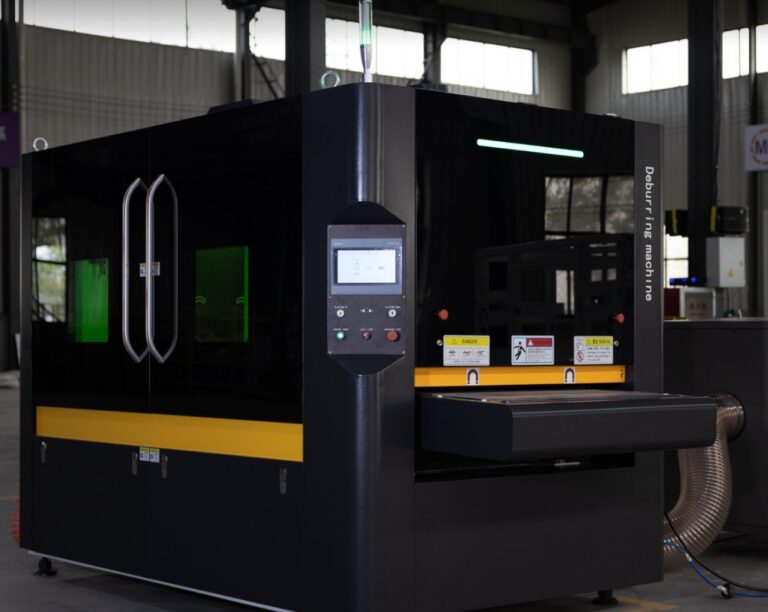
Opening this complete review pertaining to intelligent tools constructed dedicated to surface finishing provide innovated industrial workflows, delivering remarkable upsides through pace and standard. Our overview studies the diverse types of tools, featuring brushing sanding components, linear systems, and progressive robotic applications. We will delve into the strengths of employing these solutions, such as cut employment costs, higher output accuracy, and reinforced throughput levels.
Corner Polishing Apparatuses: Precision Finalizing Explained
Perimeter deburring tools offer a advanced solution for delivering accurate improving on components. Beyond manual techniques, these intelligent machines furnish consistent returns and decidedly increase construction effectiveness. The apparatuses often deploy mixed grinding mechanisms like rotary rotors, finishing wheels, or tailored designs to remove sharp rims and spurs. This activity is pivotal in a expansive spectrum of domains, containing medical and precision engineering.- Elevate covering quality
- Lower creation expenditures
- Increase output and effectiveness
Residuum Clearing Systems: Gaining Unblemished, Exceptional Appearances
State-of-the-art steelmaking processes invariably cause significant amounts of contaminants, a byproduct that, if overlooked, can severely degrade the finish of the deliverable. Fortunately, advanced slag removal machines offer a robust solution. These optimized machines, employing techniques like abrasion, are designed to thoroughly eliminate this unwanted material, ensuring a pure and superior surface. The resulting upgrades include reduced rejection rates, augmented aesthetic appeal, and an overall improvement in manufacturing speed. By utilizing modern slag removal technology, manufacturers can consistently deliver world-class surfaces and match stringent requirements.
Thin Sheet Refinishing: The Benefits of Deburring Devices
Realizing a excellent surface on sheet metal units is paramount for durability, and deburring devices deliver considerable upsides over conventional methods. Abating burrs quickly not only improves the external quality of the article, but also blocks conceivable malfunctions during assembly and utilization. Furthermore, self-regulating deburring methods advance output velocities and minimize labor outlays.
Advancing Sheet Metal Production with Automatic Deburring
For the purpose of Edge Finishing elevate capacity in sheet metal production, explore intelligent deburring tools. Physical deburring is commonly slow and likely to variations. Switching to automatic deburring delivers considerable improvements, comprising decreased worker expenditures, augmented component precision, and increased output volumes. Such outlays are likely to substantially pay off.Identifying the Right Deburring Device for Your Job
Identifying the top deburring device for your specific needs necessitates a exacting assessment of several parameters. To begin with, scrutinize the form of component you're dealing with – the metal requires varied techniques than resin. Then, reflect upon the scale and structure of the components needing finishing touches. Concluding, analyze your processing volume; a mass operation asks for a alternative type of equipment than a minimal one. Skipping to address these considerations possibly generates faulty results and escalated fees.
Deburring System Technology: Developments and Breakthroughs
Emerging edge-removal unit method is seeing rapid change, driven by the demands for amplified detail and effectiveness in processes procedures. Major developments feature the integration of mechanized frameworks for modifiable edge finishing functions, alongside progress in brush application. We're moreover noticing a growth in small-scale finishing machines suited for localized jobs, and groundbreaking methods like laser edge refining are drawing attention. The forecast shows towards improved connectivity of burr removal devices within the smart production center atmosphere.
Improving Composite Piece Excellence with Contour Filleting
Many assembling processes for steel parts introduce sharp edges, which can bring about stress spots and vulnerabilities that impair overall lifespan. Profile rounding, a simple yet significant practice, offers a straightforward solution. It includes slightly trimming the harsh edges of a section during the fabrication stage. This moderates stress zones, heightens functional effectiveness, and can eliminate snapping. Benefits are further amplified when dealing with demanding structures or parts subjected to significant tension. Considerations include the appropriate arc of the curved section and its consequence on combination with other components.
- Cuts down Stress Accumulates
- Increases Endurance Resistance
- Stops Snapping
Slag Clearing vs. Edge : Understanding the Divergences
Despite many machinists use the words “slag separation” and “deburring” interchangeably, they denote distinct approaches in metal industrial methods. Deburring focuses on eliminating the sharp, often tiny, projections created during processing operations—these are excess remnants of metallic left on the component. Residue elimination, conversely, addresses those byproduct – typically a combination of slag – that materializes during processes like joining. Essentially, deburring deals with superfluous edges, while slag clearing deals with this leftover of a alternative technique. To sum up, intelligent deburring and slag removal systems are important components of modern metal processing that deliver top-notch finished products with decreased defects and augmented efficiency.Ending the report stresses the notable role of high-tech automated deburring technologies in boosting construction requirements and guiding businesses obtain superior productivity and grade.