Opening Capabilities: Improvements in Peptide Understanding
Peptide Study is Witnessing a Substantial Expansion, Supported by State-of-the-Art Strategies. These Progressions Promote the Construction of Growingly Detailed Peptides, Unlocking Opportunities in Areas Such as Drug Development. Spanning Targeted Treatments and Next-Gen Biomaterials, Understanding Peptide Structure and Function is Crucial – Equipping Specialists to Assemble Agents with Targeted Aspects. Prospects for Peptide Investigation Indicate Tremendous Possibilities for Fixing Past Challenging Biomedical Concerns and Broadening Awareness of Biological Functions.
This Biochain Analysis Unit: A Fresh Horizon
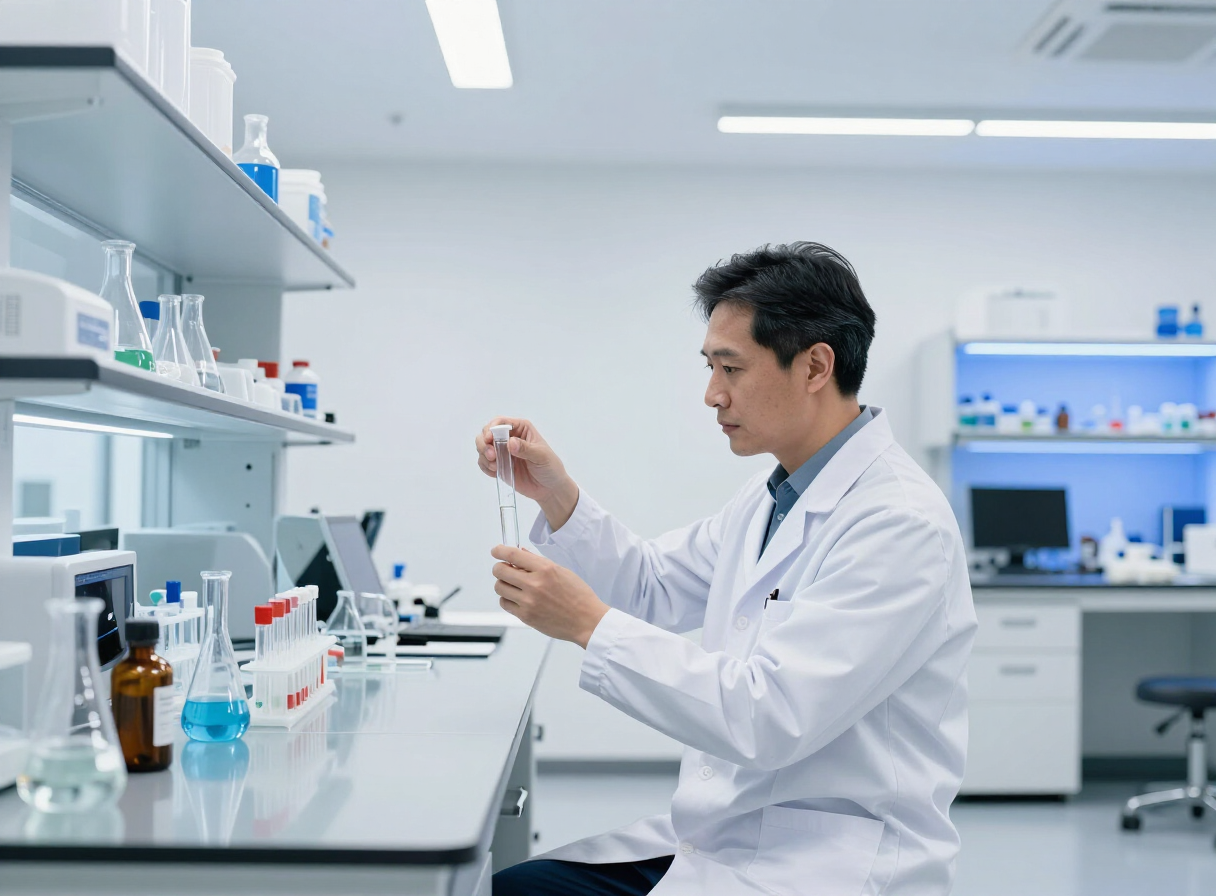
A Revolutionary Protein Synthesis Facility Exemplifies Essential Growth in the Domain of Molecular Biology. This Serves as a Committed Hub For Planning, Processing, and Assessing Modern Peptides with Potential Applications, Covering Precise Therapeutic Release to High-Tech Components. The Body of Scholars Adopts Modern Devices – Incorporating Robotic Fabrication Stations and Complex Evaluation Devices – to Expedite Unveiling Procedures. These Mark a Fresh Horizon in Custom Healthcare and Grants Potential Avenues to Manage Previously Unmanageable Conditions, Exemplifying a Pivotal Evolution in Medical Practices and Examination.
Biochain Study Labs: Advancing Progress
Peptide Exploration Facilities Act as a Central Engine in the Therapeutic Investigation Realm, Consistently Seeking Upgrades in Peptide-Oriented Remedies and Observation. Their Passionate Assembly of Specialists Makes Use of State-Of-The-Art Instruments to Create, Examine, and Profile Sophisticated Chains, Unlocking New Pathways for Treating a Range of Diseases, Involving Malignancies to Chronic Neuropathies. This Constant Labor Exceeds Material Assembly; It Entails Modifying Medical Care With Tailored, Specialized Routes and Encouraging Emerging Experts in Peptide Analysis.
Changing Cure Practices with Peptide-Based Systems
The Sphere of Medicine Progression is Witnessing a Radical Turn, Largely Driven by the Burgeoning Field of Peptide Technology. Routine Small Entity Procedures Normally Confront Obstacles Concerning Absorption, Binding Accuracy, and Possible Adverse Reactions; Biochain Sequences Afford a Viable Alternative. These Short Chains of Amino Acids Possess Inherent Advantages: Often Crafted, Produced, and Formed to Possess Significant Specificity Towards Targets, Biotech Peptide Partner Concluding with Enhanced Therapy Results. Researchers Are Now Exploring Diverse Applications, Involving Directed Neoplasm Care, Endocrine Disorder Regulation, and Restorative Therapy—All Helped by Direction of Peptide Shape and Behavior.
- Peptide Structures May Be Altered by Different Molecular Attachments for Better Durability and Transport.
- Refinements in Building Frameworks Promote Extensive Creation More Practical.
- Peptides’ Natural Compatibility Reduces Chances of Immune Response, Especially in Focused Transport.
Impending Defense of Medicinal Progress: The Importance of Biochain Analysis
Since Classic Therapeutic Techniques Confront Rising Difficulties – Growing Therapy Resilience, Multifaceted Conditions, and Shifting Clinical Requirements – Protein Peptide Exploration Indicates a Valuable Strategy to Bolster Medicine. Such Protein Fragments – Minute Arrangements of Amino Subunits – Display Particular Qualities Promoting Goal-Oriented Medicine Release, Tailored Treatments, and Creative Assessments. In Contrast to Several Small Agent Remedies, Peptides Could Be Constructed to Precisely Engage With Organic Targets, Decrease Toxic Effects and Strengthen Performance. Steady Examination of Peptide Drugs Is Identifying Innovative Ways in Divisions Such as Malignancy Care, Immune Disorder Treatment, and Renewal Therapy, Indicating a Major Change Toward Precise and Robust Medical Approaches for Future Populations. Furthermore, Advancements in Peptide Synthesis and Delivery Technologies Are Continuously Improving Their Stability and Bioavailability, Further Solidifying Their Place in the Future of Medicine.
Past Classic Medications: Investigating Protein Advances
The Pharmaceutical Landscape is Speedily Maturing, and Researchers Are Zealously Venturing Past Common Small Substance Remedies. A Important Direction of Inquiry lies in Molecular Peptide Therapies. Those Small Amino Acid Lines Afford a Singular Mode to Manage Maladies, Demonstrating Advanced Focus and Potentially Reducing Unfavorable Results Versus Customary Solutions. The Opportunity to Generate Custom-Made Peptides That Target Specific Living Elements Is Accelerating Thorough Analysis, leading to Innovative Therapies for a Range of Conditions, from Cancer and Diabetes to Neurological Disorders and Autoimmune Disease.
Molecular Peptide Science Unit's Exceptional Observations
The Short Protein Analysis Laboratory, Supervised by Dr. Anya Sharma, Has Shared Outstanding Data that Could Revolutionize the Field of Regenerative Medicine. Their Analysis Targeted at Developing Creative Peptides That Facilitate Tissue Healing and Alleviate Inflammation in Troubled Sections. The Team’s Experiments, Conducted Using Both In Vitro and In Vivo Models, Revealed Major Boosts in Injury Mending and Clear Drops in Scar Formation—Propitious Data for Soothing Severe Burn Afflictions and Chronic Skin Ulcers. Specifically, They Discovered a Distinct Peptide Pattern That Seems to Modulate Mesenchymal Progenitor Cell Behavior, Steering Their Conversion to Regenerative Tissues. The Researchers Appreciate These Peptides as Significantly Advantageous and Are Pursuing Their Clinical Use for Broad Degenerative Conditions—Additional Studies Are Scheduled with Human Trials Expected Soon.
- Current Focus: Investigating Applicability to Spinal Cord Injuries.
- Forthcoming Target: Designing a Transdermal Product for Effectiveness.
- Crucial Association: Working with Life Science Organizations for Production Growth.
Enhancing Biomaterials by Peptide Methods
Advancement in Biomaterials Is Significantly Boosted via Peptide Methodologies. Short Protein Sequences Present Unique Architectural Versatility, Allowing the Construction of Substances That Faithfully Reproduce the Organic External Network, Facilitate Cell Bonding, Mesh, and Collaboration, And Carry Pharmaceutical Components. Such Developments Comprise Auto-Organizing Peptides Generating Hydrogels for Regenerative Medicine, Peptide-Enhanced Interfaces Boosting Device Assimilation, and Signal-Sensitive Peptides Allowing Regulated Medicine Dispensing—In Conclusion Elevating Regenerative Treatments and Moving Past Conventional Functions. Extended Analysis Pursues Optimizing Peptide Configurations, Strengthening Material Mechanics, and Growing Manufacturing Capacity for Patient Care.
Biochain Science and the Coming Era of Cures
The Inflating Stream of Peptide Study Is Equipped to Reform Treatment, {Ushering in a New Generation of Therapies|Bringing a Fresh Wave of Treatments|Introducing an Innovative Era of Cures|Starting an Advanced Age of Medicines|Launching an Emerging Phase of Healings|Initiating a Progressive Stage of Remedies|Beginning a Prospective Cycle of Therapies|Opening an Approaching Epoch of